AWARE» receives many requests asking for competitive and marketing intelligence book recommendations. Over the years we have read numerous books covering all aspects of marketing, marketing research, competitor analysis, business strategy and competitive intelligence. Some we like and others we would not recommend to anyone. The books listed supplement our training services and include classic strategy texts, competitive intelligence primers and a range of business books that should be on every manager’s bookshelf. All books include a link to either Amazon UK, (for payment in GBP) or Amazon.com (for payment in US$).
Recommended Books
Robert Dover, Huw Dylan, Michael Goodman (editors)
The Palgrave Handbook of Security, Risk and Intelligence
This handbook provides a detailed analysis of threats and risk in the international system and of how governments and their intelligence services must adapt and function in order to manage the evolving security environment. The book includes a full chapter on competitive / corporate intelligence written by Arthur Weiss, AWARE»’s managing director. This is the text to purchase if you want to know more about the intelligence discipline overall, and the book examines the changing nature of conflict and the security, risk & intelligence disciplines including intelligence and organised crime; cyber security; social media intelligence; intelligence ethics, etc. Overall, 26 topics are considered – with each having their own chapter or section.
Christopher Murphy
Competitive Intelligence: Gathering, Analysing and Putting it to Work
Most books on competitive intelligence focus on the USA. Christopher Murphy’s book is different – it looks at CI in the UK, and so considers the differences between what is available in the US and Europe and the UK, covering for example, the extensive availability of financial information in the UK.
For a thorough review of this book click More Info for Jinfo’s book review.
Ellen Naylor
Win/Loss Analysis: How to Capture and Keep the Business You Want
If asked to name one technique for gathering intelligence on customer requirements, marketplace needs and competitors, win-loss analysis would be at the top of the list. Effective win-loss analysis can tell you why customers choose you in preference to competitors or vice versa – and so allow you to tailor your product development, pricing and sales strategies to maximise customer purchase. Ellen Naylor is known as the foremost expert on the technique and this book tells you what to do and what to avoid – so that you get it right.
Seena Sharp
Competitive Intelligence Advantage: How to Minimize Risk, Avoid Surprises, and Grow Your Business in a Changing World
Competitive Intelligence Advantage starts from a marketing perspective and emphasises that successful competitive intelligence results in successful marketing. The book explains the difference between data and intelligence, and the importance of looking at the whole business environment. Competitive Intelligence should not be viewed as a cost that has to be borne – but as an investment in the future that saves money and provides immediate value – that when done consistently will lead to competitive advantage.
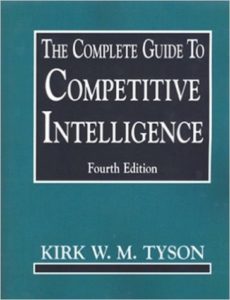
Kirk W M Tyson
The Complete Guide to Competitive Intelligence Advantage: How to Minimize Risk, Avoid Surprises, and Grow Your Business in a Changing World
As the title suggests, Kirk Tyson’s book aims to be a comprehensive manual of competitive intelligence techniques. Although, there have been, so far, 5 editions of this book, it is expensive. However, it is well worth the money as it covers the topic in depth. Although each edition was updated, the older editions are still mostly valid as an initial primer to competitive intelligence. The SCIP edition was a special update at a lower price.
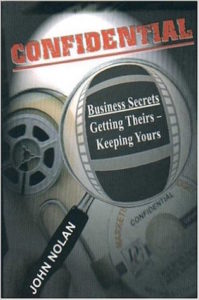
John Nolan
Confidential: Business Secrets – Getting Theirs, Keeping Yours
John Nolan is a master at uncovering competitive intelligence from primary sources. Nolan shows some of his techniques – who to ask, what to ask, when to ask and how to ask. An essential book on how to get intelligence through interviewing and elicitation and also how to protect your organisation’s intelligence secrets. It shows how to legally obtain competitor business secrets without crossing the line into industrial espionage and illegality.
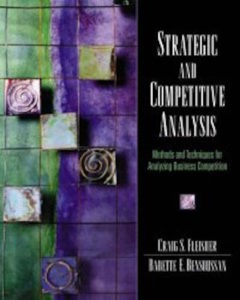
Craig S. Fleisher & Babette Bensoussan
Strategic & Competitive Analysis: Methods and Techniques for Analyzing Business Competition
An excellent review of the most common techniques of competitive and strategic analysis – giving instructions on how to use each technique, when to use it, and each technique’s pros and cons. This book should be on every strategic planner and competitor analyst’s “must have” list and is essential reading for business studies and MBA students. The book covers all the main analysis techniques e.g. the BCG matrix, Porter’s 5-Forces analysis, financial, value chain, and blindspot analyses plus SWOT and PEST analysis approaches.
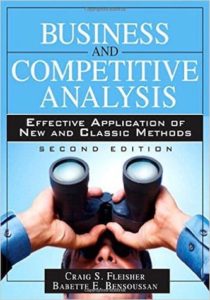
Craig S. Fleisher & Babette Bensoussan
Business and Competitive Analysis: Effective Application of New and Classic Methods
Fleisher & Bensoussan take their previous book on strategic analysis a step further, starting with a practical primer on the process and context of business and competitive analysis: how it works, how to avoid pitfalls, how to communicate results and even how to decide on which analysis technique to use. The book then covers further business analysis techniques including McKinsey 7S, competitive positioning, war-gaming, win-loss analysis and many more. Each is accompanied by clear explanations of how and when to use the technique plus any problems in using it.
Renee Mauborgne & W. Chan Kim
Blue Ocean Shift: Beyond Competing – Proven Steps to Inspire Confidence and Seize New Growth
Blue Ocean Shift is the follow up to Blue Ocean Strategy and shows how to move into a “blue ocean” uncontested environment – away from cut-throat (“red ocean”) competition. The book gives an implementation guide to turn the contested, competitive environment into a new growth environment and shows that you do need to be disruptive to be successful and grow. The book includes new examples on how organisations have shifted to a new paradigm – creating new markets allowing them to grow.
Alexander Osterwalder & Yves Pigneur
Business Model Generation: A Handbook for Visionaries, Game Changers, and Challengers
The Business Model Canvas is, perhaps, the most important new strategic approach to analysing organisational strategy over the last 20 or so years. Business Model Generation is the book that describes the Business Model Canvas and how to use it. It is an easy to use and engaging, graphical book that takes the user through all the steps involved in mapping organisational business models. Reading this along with other books such as Blue Ocean Strategy can help strategists look at their own or their competitor’s business models and create new ones that enable growth and business success. It will enable the reader to really understand the connections between customers, distribution channels, revenue streams, costs and the core value proposition.
The book is essential reading for business planners, competitor analysts, marketers, strategists and anybody who needs to look at how organisations actually work.
Alexander Osterwalder, Yves Pigneur, Gregory Bernarda and Alan Smith
Value Proposition Design: How to Create Products and Services Customers Want
Customers don’t buy products and services as such. They buy solutions that match their needs. To reach customers you need to show them that what your product or service offers will be a solution that satisfies the customer’s needs. This is the value proposition. It is one of the key building blocks for the Business Model Canvas. Without an effective value proposition, your business will fail – even if your product or service. is, seemingly excellent. It will fail as it won’t match customer needs. Value Proposition Design addresses this and introduces the Value Proposition Canvas that you can use to match what you offer to what your customer wants to buy. The Value Proposition Canvas should help you design and create the products and services customers want – and this book tells you how to do it, using a similar approach to the previous book in the series Business Model Generation. As with Business Model Generation, this book is also essential reading for anybody involved in new product development or for competitor analysts assessing competitor product development.
Richard Rumelt
Good Strategy/Bad Strategy: The difference and why it matters
This is one of those rare books that clearly explains what a good strategy involves, and why so many companies put out bad strategies even though nobody plans to do a bad strategy. The book cuts to the chase, explaining what makes the difference between success and being an also-ran and includes vivid case examples that clearly show how to recognize the good, reject the bad, and make good strategy a living force in your organisation. Rumelt emphasises that good strategies should not be confused with ambition, goals or vision – rather they should focus on the challenges the business faces and how to overcome them.
Benjamin Gilad
Business Blindspots: Replacing Your Company’s Entrenched and Outdated Myths, Beliefs and Assumptions with the Realities of Today’s Markets
Ben Gilad is a noted and well-respected competitive intelligence thought-leader – and Business Blindspots was one of his first books. Unfortunately the third edition, which includes comments and updates to the previous two editions, is only available as a Kindle e-book (GBP) (US$). The book covers the blindspots that affect businesses and prevent them from seeing the threats that could damage them resulting in them missing opportunities that would help them grow. It covers the myths, assumptions and taboos present in all businesses – and the importance of developing a process to identify these and negate them.
Michael E Porter
Competitive Strategy
Competitor Strategy is essential reading – for students, managers, academics and anyone who needs to know how to monitor competitors. This text introduces Porter’s 5-Forces model – used to understand the forces acting on companies and industries as well as the key 4-corners analysis technique for anticipating competitor future moves. My only reservation is that the book is not an easy read. Michael Porter, the book’s author, is often viewed as the father of competitive intelligence as a management discipline – and this book was the start.
Michael E Porter
Competitive Advantage
Following on from where Competitive Strategy left off, this classic text offers ideas and techniques for analysing companies – so as to gain an understanding of their success or failure. The book introduces the Value Chain concept for analysing company strengths and weaknesses.”
Sharon M Oster
Modern Competitive Analysis
Michael Porter, in the 1998 introduction to his book Competitive Strategy mentions a few books that have moved his original ideas forward. This is one of them. Oster’s book is a thorough analysis of the subject, with a strong mixture of theory combined with practical examples. The book emphasises that a full understanding of economic and managerial principles can make a striking difference in the quality of the strategic planning of an organisation and provide guidelines for effective corporate strategies. Covering areas in economics not treated in most other management and strategic planning books (eg game theory, added value analysis, etc.), Modern Competitive Analysis offers real guidance to forward-thinking management.
Cinzia Parolini
The Value Net: A Tool for Competitive Strategy
A new way of looking at industries, challenging existing models on how value is created for companies. The book presents a new model – the value net, which aims at helping users to deal with problems assessing value in contemporary business and competitive systems.
Although the back cover says that the book is highly readable, we found that it was not the easiest read. However it is a worthwhile read and gives new ideas for understanding industries, companies and competitive strategy.
Graham Hooley, Brigitte Nicoulaud & Nigel Piercy
Marketing Strategy and Competitive Positioning
Marketing Strategy and Competitive Positioning deals with the process of developing and implementing a marketing strategy with a focus on creating superior market performance. It looks at ways of identifying and finding out about target markets, customers and how to differentiate the company from competitors through appropriate market positioning. The book considers both offensive and defensive competitor strategies and includes some great case-studies. It places competitive positioning at the heart of marketing strategy and includes in-depth discussion of the processes used in marketing to achieve competitive advantage.
Philip Kotler & Kevin Lane Keller
Marketing Management
One of the very best texts on marketing. Marketing Management covers all aspects of marketing management, from direct and on-line marketing to marketing planning and marketing strategy. Philip Kotler is one of the leading marketing gurus and this book shows why. If you can only buy one book on marketing management then this is the one to purchase. Kotler (and co-writer Gary Armstrong) has also written Principles of Marketing (UK£) / (US$). This is an essential guide to marketing and the two books give a comprehensive view of all aspects of the subject.
Malcolm McDonald & Hugh Wilson
Marketing Plans: How to Prepare Them, How to Use Them
Marketing Plans is an extremely comprehensive and well-written guide to preparing and using marketing plans. It is aimed at both students and practitioners – and is an essential reference to best practice that all marketing managers should be familiar with. The book explains the marketing planning process from initial assessment to profit targets using a step-by-step approach on how to devise a marketing plan and includes questions, case histories and diagrams. For a different view of this topic Malcolm McDonald and Peter Morris’s Marketing Plans: A Complete Guide in Pictures (UK£) / (US$) is interesting. This is a cartoon book illustrating the marketing planning process and a lot more – marketing analysis and theory. It makes a great revision book and also simplifies the concepts in the highly visual way that make cartoons such a great learning tool.
Alan Wilson
Marketing Research: An Integrated Approach
This book places marketing research into the bigger picture of marketing and demonstrates how marketing research and its understanding should be seen as a key element of marketing rather than as a back room activity performed by statisticians. The text integrates the key concepts and techniques of marketing research with the management of customer information from databases, loyalty cards and customer files. The book is written in a clear and accessible style and includes many examples, real life case histories and discussions of current issues in marketing research and customer information management.
This book is one of the recommended texts for the UK Chartered Institute of Marketing’s Professional qualifications in Marketing Information and Research, and thus is essential reading for anybody considering taking these CIM qualifications.
Al Ries and Jack Trout
Marketing Warfare
A fun book that looks at the strategies companies take to compete in the marketplace. The book examines strategies from the great military generals such as von Clausewitz and applies them to the business world. (In this context, the ideas are similar to those looking at Sun Tzu and business – except that von Clausewitz is currently less fashionable).
Ries & Trout are two major authors on marketing strategy, guerilla marketing and similar concepts. This book gives a good introduction to their approach and is highly recommended.
Warren Keegan and Hugh Davidson
Offensive Marketing: An Action Guide to Gaining the Offensive in Business
This is an update to Offensive Marketing by Hugh Davidson and another easy-read. The book looks at how marketing strategy can be used to gain competitive advantage – and introduces the authors POISE (Profitable, Offensive, Integrated, Strategic, Effectively Executed) framework to to strategy design. POISE brings together advances in strategy, innovation, and approach to produce a clear strategy and new level of effectiveness that gives market results.
Clayton M. Christensen
Seeing What’s Next: Using the Theories of Innovation to Predict Industry Change
Clayton Christiansen has specialised in the concept of disruptive innovation i.e. innovations that change industries and result in incumbents losing business. In this book he examines the processes behind “disruptive innovation” and looks at why some new emerging technologies succeed whereas others fail to take off. The book answers the question as to why established market leaders often lose their throne to a newcomer offering a new way of doing things. Also provided are suggestions on what companies can try to do to save themselves when faced with new untested technologies.
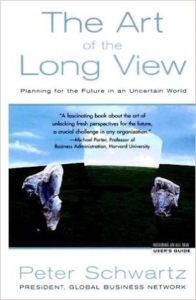
Peter Schwartz
The Art of the Long View : Planning for the Future in an Uncertain World
If there is one book that is head and shoulders above other scenario planning books, this is it. Schwartz’s book is a joy to read and gives a tremendous introduction to the subject, leaving the reader with a firm grounding and understanding in the way that scenario planning has helped many companies gain competitive advantage in their industries. The text includes many case studies and anecdotes making it a must-read book. Peter Schwartz is not only one of the world’s leading scenario planners – but an excellent writer also. (Schwartz has also written a short supplement in 2011 called Learnings from the Long View (UK). (US). which updates and reports on the scenarios in the original book. The update is worth adding to the main book but not as a standalone text).
Buy £ UKBuy $ US
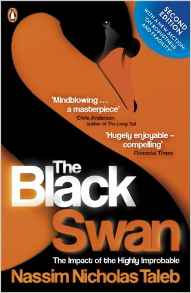
Nassim Nicholas Taleb
The Black Swan: The Impact of the Highly Improbable
Nassim Taleb’s bestseller shows how to stop trying to predict everything – and take advantage of uncertainty. The book looks at how unpredictable, random events play major roles in our lives – whether in business or personal life. Such “black swan” events have huge impact but are impossible to predict, yet in hindsight they appear obvious. Taleb looks at ways to build robust business models that can cope with such events.
Buy £ UKBuy $ US
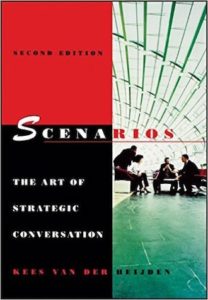
Kees Van Der Heiden
Scenarios: The Art of Strategic Conversation
Kees Van Der Heiden’s book gives a more thorough and theoretical grounding into the subject of scenario planning than Peter Schwartz’s The Art of the Long View. Although this makes it a more difficult book to read, it is still an excellent book and gives a comprehensive view of the theory of scenario planning and how to construct workable scenarios.
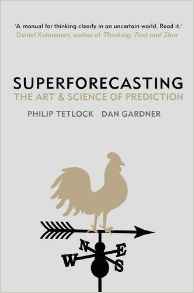
Philip Tetlock & Dan Gardner
Superforecasting: The Art and Science of Prediction
Everything we do involves forecasts about the future. In Superforecasting, Tetlock looks at what makes a good forecaster – and shows that the average expert is only slightly better than a layperson guessing what’s next. However there are people who can predict the future with much greater accuracy and in a major project putting government experts against a range of ordinary people, he shows how and why the “ordinary” people achieve better results than professional intelligence analysts.